Most shortbread recipes start the same way: cream butter and sugar together until pale and fluffy, then work in the flour. This recipe skips that step entirely. The butter goes into the mixer bowl cold and cubed, and a slow five-minute paddle-mix does the work your hands would normally do - one of the reasons this batch comes out with such a fine, sandy crumb.
The flavour carried through all that butter is Aniseed Myrtle, a native rainforest leaf with a gentle fennel-and-licorice character. It is not part of the Zea Gourmet range, so look for it dried and ground through specialty native food suppliers. Baked in mid-November, this is deliberately an early entry in our festive baking line-up, timed so there is a batch ready well before the real Christmas rush starts.
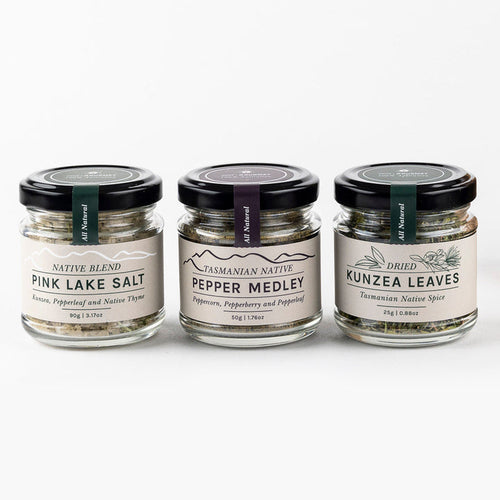
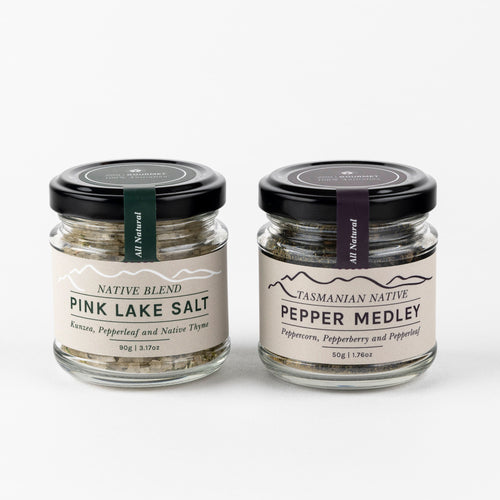
A small measure of Pink Lake Salt goes into the dough alongside it, there to round out the butter rather than announce itself.
At a glance: Makes 16 fingers | Prep 15 min | Cook 40 min (+ 30 min chill)
Ingredients
- 225g plain flour
- 100g rice flour
- 225g salted butter, at room temperature, cubed
- 100g caster sugar, plus 2 teaspoons for dusting
- 2½ teaspoons dried Aniseed Myrtle
- ½ teaspoon Native Blend Pink Lake Salt (use ¼ teaspoon if substituting fine salt)
Method
- Preheat the oven to 140°C fan-forced (160°C conventional). Lightly grease a 29cm x 18cm slice tin, then line it with baking paper, leaving enough overhang on two sides to lift the whole slab out later.
- Fit a stand mixer with the paddle attachment and combine the plain flour, rice flour, caster sugar, Aniseed Myrtle and Pink Lake Salt on low speed.
- With the paddle still on low, add the butter cubes a few at a time. Give it a full five minutes, longer than feels necessary, and do not be tempted to speed things up. You will watch the mixture change from loose flour to a coarse, pebbly crumb entirely on its own, without a hand ever touching it.
- Tip the crumb into the tin and bring it together briefly with your hands, kneading just until it holds as a smooth dough.
- Press the dough evenly into the tin and smooth the top with the back of a spoon. Prick all over with a fork, then chill for 30 minutes until firm. This stops the shortbread spreading and losing its edges in the oven.
- Bake for 40 minutes, or until a very pale golden brown all over. Shortbread should never brown properly - if it looks almost too pale to be done, it is right.
- Set the tin on a rack, sprinkle the extra caster sugar over the top while it is still warm, and leave it in the tin for a few minutes to firm up.
- Using the baking paper overhang as a sling, lift the whole slab onto a board and cut it into 16 fingers while still warm. Slide the fingers, still on their paper, back onto the rack to cool completely.

Five minutes that make the crumb
Most shortbread starts with creaming: beating butter and sugar together until pale, the same first move as a cake. This method deliberately avoids it. Cold butter worked slowly into flour behaves completely differently to butter beaten with sugar - it coats the flour in fat before any liquid is added, which limits how much gluten can develop. Less gluten is what gives shortbread its crumbly, almost sandy bite, rather than the stretchier texture of a cake or bread. Rice flour pulls in the same direction. It is a starch with no gluten of its own, so swapping some of the plain flour for it dilutes the mixture's gluten even further.
Five minutes on a low speed feels like it is taking forever when you are standing at the mixer watching mostly nothing happen. That patience is the point. It is exactly as long as cold butter needs to work all the way through the dry ingredients without picking up enough warmth to start softening and creaming on its own by accident. Speed the mixer up to hurry things along and you undo the whole advantage of starting cold.
Tips and swaps
- No stand mixer in the kitchen? Work the cold butter into the dry ingredients by hand, rubbing it between your fingertips until you reach the same coarse, pebbly texture, then pick the method back up from step 4. It will not take five minutes this way, so work quickly and keep the butter cold.
- Prefer a citrus note to a licorice one? Dried Lemon Myrtle swaps in for the Aniseed Myrtle at the same quantity, from the same specialty native food suppliers.
- For extra crunch and a sweet-salty edge, scatter a few more flakes of Native Blend Pink Lake Salt across the top of the dough right before it goes in to bake.
- Cut the slab into fingers while it is still warm from the oven. Once shortbread cools all the way down it turns brittle and tends to crack rather than slice cleanly.
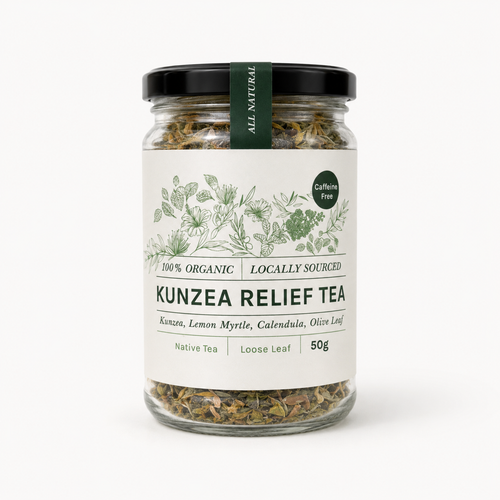
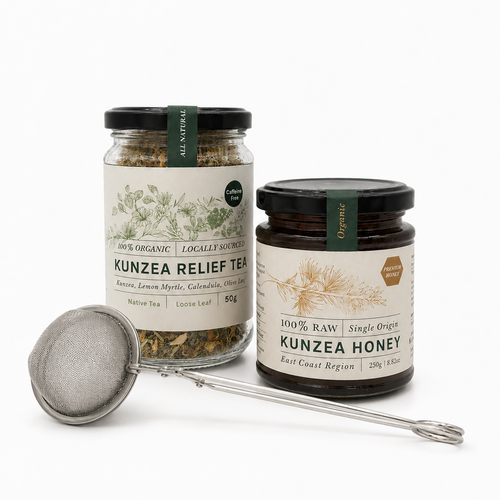
- A tin of these with baking paper between the layers travels well and keeps for weeks, which makes it an easy Christmas gift on its own. Add a box of Kunzea Relief Tea alongside for an afternoon-tea pairing that needs no further thought.
- This is the first release in a three-part shortbread run leading into Christmas. Our Kunzea Honey & Muntrie Berry Shortbread and Australian Christmas Shortbread pick up later in the season, if this one has you looking for more.

Storage
Baked fingers keep in an airtight container at room temperature for around 2 weeks. If you would rather bake later, the raw dough freezes for up to a month. Defrost it in the fridge overnight, then pick up again from pressing it into the tin.
Shop the recipe
- Native Blend Pink Lake Salt - a five-part blend of Pink Lake Salt, Mountain Pepperleaf, Saltbush, Kunzea and Native Thyme. Half a teaspoon in the dough is enough to round out the butter without turning the biscuit savoury.
Start this one in the first half of November and there is plenty of time for a test batch before the good stuff goes into the tins for gifting.